Everyone knows that in a novel there is at least a main character (MC) and their antagonist - the person who makes the MC's struggle real - and secondary characters, their friends or sidekicks.
One set of characters some novice writers forget to add judiciously are the background characters - the extras in a movie. These are the people on the street, in the restaurants, or neighbors. These people help flesh out the MC.
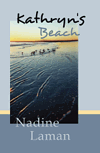
Since I can use my books without anyone's permission, I'll use them for examples. In Kathryn's Beach there is a convent. The most prominent nuns are Sister Elizabeth and her sidekick Sister Theresa. However, other nuns walk in and out of scenes, perhaps say a line or two, and leave. It wouldn't be very believable that Saint Mark's was a real convent with only two nuns. To tell the truth, I had to keep a list to remember which nun was the school principal. They weren't that important to me or to the story to remember their names. But they played an important role in making the convent and the two main nuns seem more real.
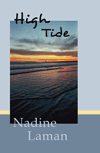
The same goes for the mention of the traffic on the freeways in Los Angeles. I don't make a big deal of it, but it would be lacking to not mention the traffic problem that caused the detour Kathryn and Sister Theresa took that lead to Sister Theresa's big question to Kathryn in High Tide. Wouldn't it seem odd to drive all over LA and never mention traffic?
Also at the airport in High Tide, even though Kathryn couldn't go to the gate now like she did, she could when the ms was written (pre-September 11, 2001). It makes sense for the traveler to bump Kathryn with their carry-on bag and the people she encounters on the escalator. LAX is a very busy airport. There had to be people in it for anyone to believe Kathryn was at LAX. Whereas, Kansas City International (KCI) closes down early and no one is around when you get off the plane - very spooky!
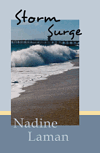
Storm Surge switches settings requiring a whole new group of background characters had to be cast, like the gardner. Some of them had been introduced in High Tide, so the trilogy carried over from one book to the next. Otherwise it would be like Kathryn had been plucked out of the two previous books and plunked down into a different story all together.
Keep in mind camera angles and you won't forget the background characters. There is always a wide angle or pan to show the other people in the location, then it narrows onto the principle characters per that scene. Pay attention to that when you watch TV and translate it to your writing - don't forget to cast a few extras in your novel.
Thursday, November 19, 2009


Wednesday, November 18, 2009
Location, location, location...
Nope! I'm not looking to buy or sell property. However, location plays a major role in the setting for mss. (Actually, it applies to more than novel writing, any form of fiction needs a setting or set for scripts.)
Even though location plays a backstage role in most novels, it can have a huge impact on the believable factor for the reader. You can take the average main character (MC) and move them from one location to another unrelated location, and their behavior will adapt - or should.
While the characters, particularly the MC and the antagonist, play the largest role in getting the reader to dispense with reality and buy into your story's reality, a well done setting can help the process along.
I'm visiting in Pine, AZ, in the Tonto National Forest. This isn't the typical mountain living, like in Flagstaff or one of the Colorado mountain cities. This is where cabins are sparely placed in the forest. Many of the roads are dirt and rugged.
One thing I've learned in the short while I've been here is to scan the horizon for smoke every time I go outside. Forest fires are frequent in the Arizona forests (and in Southern California).
As we were driving up the 500 feet elevation from the town where shopping is done here, we noticed a yellow-brown haze hovering over the next ridge ahead of us. It was the kind of thing found over many US major cities, but we both scanned for the source of the smoke. Once we found the chimney of smoke was narrow and from the east of where we were headed, we resumed our conversation and proceeded up the mountain.
The point is, there are behaviors that locals do particular to their environment. Don't go overboard, but if you can add something to convince the reader who has lived in a similar location that this is true, you are one step closer to moving them to dispense with disbelief.
The converse is true. Hubby's great aunt remarked once how a fairly famous writer had the moon rise over the Mid-western plains at 2:00 AM. She threw the book in the fireplace. The moon does not rise that late in the central plains states. Actually, it should be beginning its descent by then.
While I don't want novice writers to sweat blood over every detail, do pay attention to particulars that the locals would know are pure fiction, if you're asking them to move into the world you've created in your novel and believe it is real.
On the other hand, in SciFi or fantasy, it is sometimes useful to take a known item from our world, like the moon rising, and have it behave differently. That gives the novel an other world quality. So, maybe you want the moon to rise at noon. Then you can have the characters react to that, such as saying it will be clear for the battle or the journey at hand. I think it is handy to take an element from the setting that is familiar and guide the reader to translate that item into the unreal world.
Make sure what you add to your story is there for a reason, not just filling space. Write well, enjoy the process, and take your readers with you.
TIP: Get travel videos from the library and watch the locals in the background of the host.
PITCH: I rarely pitch, but Kathryn's Beach is an excellent example of setting contributing to the character of the MC. The link to purchase is in the left sidebar of this blog.
Tuesday, November 17, 2009
More Industry News!
Sheesh, what's happening to me, I'm writing industry news two days in a row? Well this interests me because of the German idea that books' prices can't be undercut. That messes up the whole idea of the price war that I mentioned a few posts back, which isn't a bad thing for writers who actually would like to have a bit of change in their pocket for their efforts.
There are pros and cons about price fixing. One one hand, there is the 'what the market will bear' and on the other hand, there is the idea of the need to make money to stay in business.
I'm not taking sides in this, but it is interesting as Amazon's Kindle goes world wide. The other e-readers are sure to follow.
Read about it here: http://publishingperspectives.com/?p=7852
Monday, November 16, 2009
News Flash!
I'm not THE SOURCE of industry news, but I thought I would pass on that there is more news about the Google Books Settlement.
The lawsuit is a class action suit. Like everyone else who was a potential member of the class, I was notified of the lawsuit and given the option to opt in or out of the class.
There were writer's groups who filed Amicus Briefs, and somehow, ended up speaking for more than their members and negotiating a settlement for all of us.
The thing is, while I'm not totally opposed to scanning books, it seemed to me that the libraries did not have the rights to the books to consent to scanning to be used outside their library system, especially to generate money for the scanning entity, without regard to payment to the rights holders.
Then the thing went off on orphan works. You'll just have to read the stuff to figure it out. I opted out of the class which means I can bring my own suit rather than rely on the agreement reached in this suit.
Since the deadline to opt in or out came long before the agreement to a settlement, it was in my mind, agreeing to an unknown. I'm not saying the settlement is good or bad, I just didn't want to agree to something undefined. That is a lot like signing a blank contract.
So the lesson here is that as a writer, it is important to be aware of the industry news. That is what being part of something means - you know what is going on.
Read the Google blog here: http://googlepublicpolicy.blogspot.com/2009/11/modifications-to-google-books.html
And there is this: http://www.monstersandcritics.com/news/europe/news/article_1513464.php/German-publishers-criticize-new-Google-Books-deal
And there is this. I'm surprised about the extract comment since originally my understanding was full books - way back when (a couple of years ago): http://business.timesonline.co.uk/tol/business/industry_sectors/media/article6919335.ece
As I recall, long ago, when my first books went on Google Books, the revenue went to my publisher and there was (according to him) no plans to split it with me -- not Google's fault.
Friday, November 13, 2009
What is Cactus Rain?
 Cactus Rain is a boutique publishing company. It is registered with the Arizona Corporation Commission. That makes Cactus Rain a small press.
Cactus Rain publishes international fiction for the American market. The stories are inspiring as well as entertaining. The writing is strong, the characters are often ordinary people on a quest that leads to a heroic act.
Cactus Rain is not a DIY company. It is a new concept, taking the best from the existing models.
There is a vetting process. The specific submission details will be on the website when we finish building it. A query letter and synopsis will be required. There will be no electronic submissions, at least for now. If a full or partial manuscript is requested, that can be submitted electronically in MS Word or WordPerfect.
There is no set-up fee. There is no advance. There are no royalties. What? No royalties? Royalties means the profits are split with someone.
It is a very simple concept. Once an ms has been accepted, it is formatted, given an ISBN, and a cover at no cost to the author. The author pays for items like the US Copyright fee - and keeps the copyright. With the ability to print any size run, there is the ability to control cost and inventory to meet the demand for the book rather than large stacks of boxes of books sitting in storage.
When books are needed, the author pays the cost to print the book, plus a little something for me to recoup my expenses, then keeps the profit when the book sells, minus expenses like PayPal fees.
The books will be listed in the Cactus Rain catalogue and on the Cactus Rain website and [probably] Amazon.com. The author can sell books from their website or out of their car. As the catalogue builds, other means of distribution [bookstores] will be pursued.
It is all a process - creating a business, developing a website, all of it. More information will be forthcoming. Submissions will be accepted in early 2010.
Why did I create a publishing company when I have one of my own for my books? Simple. I am tired of writers who are not with a traditional publisher barely making any money for the hours invested in writing a novel. Being a person of action, I created a company that does for others what my company, Nadine Laman Books, does for me.
Thursday, November 12, 2009
Characters You Love
Am I the only one tired of me writing about writing? Yawn.
Tell me about a fictional character you love, one that you sympathized with and found it easy to make the leap to believe they are/were real. What was it about them that makes them stand out in your mind, even now?
Indicate in the comment section below the title and author, the character's name, and a brief bit about what you like about them. It's your turn to do the writing and give us all a break from me.
If you don't want to entertain me and rather read more about how to write, read this (sent by Susan Gabriel). http://entertainingwelsey.wordpress.com/2009/11/06/how-to-write-a-novel/
Wednesday, November 11, 2009
THE END.
Recently I was watching a crime show on television. The story was pretty good, but as I looked at the clock and they only had 15 minutes left (including commercials), I began to wonder if the crime was going to be solved.
It was a complicated crime and the characters were interesting. There were several unrelated suspects and the stars kept following leads well into the show.
Then it came. The forensics expert came up with information that came out of no where to solve the case. There had been no hints. It was as if this information was from another script entirely. In writing that is called dropping alligators (answers) over the transom.
I can't say that I'm thrilled with the endings of Kathryn's Beach or High Tide. Storm Surge ends much better. Good thing that it does because it also carries the weight of ending the trilogy.
The end of the story is just as important as the beginning. There is tons of material about writing killer first lines. Not only does the first line have to hook the lit agent or publisher, it has to hook the reader.
Then it goes from there, the next few chapters have to set that hook firmly. The middle has to keep 'em reading, and the end has to deliver satisfaction.
I think the tricky part is to do the end. Write the first draft through, beginning to end, without going back to edit. Honestly, that see-saw back and forth of trying to edit as you write really shows, you aren't fooling anyone. It is like putting on the second coat of paint on one part of the wall when you don't have the first coat done on the whole room. It shows when the paint drys - oh yes, it does.
At the first time through with rewrites and edits, look at the end bit. Was all the solution heaped in a pile? If so, take each section and divide it up. The telling part should be sensibly placed throughout the ms. Best to scatter it through in dialogue or bits of scenes. Then when the solution/resolution of the subplots come, it isn't a huge surprise like a bucket of cold water in the face.
Most of the time we want the reader to be surprised in the right way, the way that they are delighted and satisfied that everything came together logically. We don't want them surprised like I was in that show I mentioned in the beginning of this post. All the subplots don't have to wait until the last chapter to be resolved. Some can be completed sooner and used for the main plot to stand upon for its resolution.
It is hard to see the trees for the forest in our own writing. Get someone you trust to be honest and helpful to dispassionately discuss the story with and be honest with yourself if you need to hire a content editor. Don't be territorial over each precious word. The point of writing is to give the reader a good story.
Tuesday, November 10, 2009
Self-Publishing
Most people use the term "self-publishing" rather loosely. What they mean is usually a company that is paid a fee -- the lowest one I know of the fee chargers is $499 USD -- and they put the book into print using some form of Print On Demand technology (POD). That set-up fee does not include anything more than putting the ms into an auto formatting software and creating a cover for the book, plus placement on their website. World distribution is most often simply uploading the book onto one or more third party online vendors.
If you look around there are several free companies. They recoup the free part in the price of the book to the author. Of course, it is the usual situation of what you put in is what you get out. It doesn't fix things for you. You book is printed exactly like what you put into the software.
Whether a set-up fee is paid or not, the success of the book is totally up to the author to drive sales. There are a million and one (roughly) companies that sell authors (glassy-eyed authors) packages for marketing and goodness knows what else. Their pitch says all the things everyone wants to hear and can empty the writer's pocket quickly -- but I've written about this several times, and I'm not the only one who has.
What self-publishing means in the strict interpretation of the term is that the author causes their book to be published. They either do the work themselves or hire it done. What work would that be? Goodness, where to begin. Basically, self means self. It includes everything from editing to binding choices, paper weight, formatting, cover art design...and EVERYthing in between, including paying fees to be listed online. This is total financial responsibility for the books, so the best shot is to learn everything needed and spend the money to get it right the first time. The author better believe in their book because the investment won't be recoup'd overnight.
Frankly not every ms is destined for the big NY publishers. This is a business industry and just because the writer's spouse, mom/mum, or Aunt Edna loves the ms doesn't mean it will be published and a best seller.
The good thing about so many ways to get published from the largest imprints to the smallest of presses is that a savvy author can best target the publication route that fits the ms' potential audience. While I do like the folk art quality of some self-initiated books, I also like a book that is commercially driven, if the writing is sound in both cases.
I found the following in the comments on Galley Cat's blog. I added the bold to the text.
"...The reason self-publishing won't kill traditional publishing is that most authors can't edit their own stuff and/or aren't willing to hire someone competent to do it for them. A lot of readers are willing to put up with bad grammar and awful spelling on social networks, but how many are going to want to read whole books that way? Anyway, it's not just a question of grammar and punctuation: editors help with plot development and characterization too..." Paula_B
Excerpt came from the comments here: http://www.mediabistro.com/galleycat/publishing/will_there_be_book_publishers_in_10_years_140865.asp#
BTW, Galley Cat has always been a good blog to follow.
Monday, November 9, 2009
RSS Feed
Way back in the dark ages when some people (not me) had those huge satellite dishes in their front yard, a west coast or east coast feed could be had and thus a greater choice of when to view certain shows.
So knowing what a feed is isn't rocket science. I've spent a couple of months (not full time) looking into doing an RSS feed of my blog onto my filedby page.
I read about it, I ask my friends about it, and I Googled the daylights out of it. I usually read the Wiki entries on topics of my searches. My web designer, Joyce from DesignByJoyce.com sent me two links of instructions.
Finally I followed the instructions and put the magic combination of letters following www into the filedby slot and waited. Nothing happened, which is usually what happens when I do stuff on the internet, so it wasn't that much of a disappointment.
Silly me, this isn't StarTrek and things take a while to do their thing. The next time I went to filedby for something else, I saw that my blog had migrated to that page. I'm not sure how I did it, but it seems a month's of posts are on my filedby page. I think that is pretty cool. Go look! http://www.filedby.com/author/nadine_laman/2238025
I half expected to see the orange RSS logo automatically appear on my blog -- and it still might. In the mean time, I fiddled around and put something on the left sidebar that seems to be RSS.
Goodness, NO! I haven't clicked on it to see what it does, I just put it there and think that was as much as I dare mess with the thing for one day.
That Disclaimer thingy about compensations and endorsements:
The Google search was free, RSS Feed was free, my page at filedby.com was free, the advice from my friends was free, and the hours of entertainment this effort has provided said friends who laughed their butts off was free, though I might start charging for the front row seats to my agony.
Links:
http://en.wikipedia.org/wiki/RSS
http://www.ehow.com/how_2031123_set-up-rss.html
http://www.designbyjoyce.com/
Saturday, November 7, 2009
Opps!
I noticed a few things I forgot in recent posts. Just goes to show what happens when I'm writing without notes.
In the posts about manuscript formatting, the cover sheet info should include the genre and word count.
In the synopsis heading or in the first line of the synopsis, add the genre and word count. I like it in the heading best.
And finally, we live in an international world. If you plan to query in the US and live elsewhere, keep in mind that our letter size paper (8.5 x 11.5 inches) is standard. When I print items that are A4, depending on the format, it prints wacky. I have no idea why a literary agent would print something sent electronically, but if they do...have your ms set to the right paper size.
I've added this info to the posts.
Subscribe to:
Posts (Atom)



 When Paul Fenton stops for breakfast in a small town, he gets more than he bargained for in the process.
 When two-hundred-year-old human remains are discovered on one of Neptune's moons, Earth's history falls into question.
 Emily's husband persuades her to try thalidomide to ease her symptoms as she is unaware of the devastating effects.
 Who is the women's shelter bomber? Melissa Ryan suspects that her husband knows.
 Further developments with the Wilder family.
 A hidden past shakes the O'Donovan family to its core
 A swirl of emotion and choice, set in Cape Town, South Africa
 Love is a constant, but it comes at a price.
 When the road ahead is unclear, sometimes you have to rely on trust.
 The struggle between good and evil is ages old. It gets all the more complicated when the good guys aren't all good and the bad guys have redeeming qualities.
 Story of a land mothering two races of people – the light-skinned and the dark-skinned.
 A gifted Ukrainian ballerina comes into possession of a mysteriously coded address book.
 Six passengers' lives change for better or worse after they arrive in Honiton.
 Resilience and love in a harsh and unforgiving age
 Kathryn's Beach
 High Tide
 Storm Surge

