I think this is very cool. Listen to the beginning of this ...
http://www.euradionantes.eu/index.php?page=podcast&id_programme=115 (New perspectives du Jeudi 30 Mars)
Sunday, April 24, 2011


Wednesday, April 20, 2011
What NOT to write
Lately, there have been quite a few queries for young adult novels. My friend Jen Garsee writes YA, and I love her books. However, she writes for a huge publisher who specializes in YA.
While I can't possibly list all the genre that Cactus Rain isn't interested in, YA is certainly not a market we can romance.
What we are interested in is mainstream fiction that appeals to a wide general audience. I tend to like good solid stories that are well written. Books with staying power, timeless, fit our business model.
While I fully understand the crazy drive to write a specific story - we are nearly possessed at times - writers also have to understand the industry and the buying habits of readers.
Think about the last 10 books you bought full price. I have several friends who haven't bought a book in years. They borrow them from a circle of friends who trade among themselves.
There are no royalties to authors on books loaned, borrowed, bought at garage sales, or used book stores. Books bought from discount retailers don't bring full royalties either.
At some point in a writer's transition from crazed hobbiest to professional, thinking changes and an understanding emerges regarding the mind set of the reading public. That is how publishers think.
http://ereads.com/2011/04/read-this-then-jump-out-the-window.html
Saturday, April 9, 2011
Friday, April 8, 2011
Have you seen this?
View this in full screen and turn up the volume. http://www.youtube.com/user/NadineLaman#p/a/u/0/RsPHmAxRYJA
Posts
Every day this week, I've written a post. No matter what I try, it comes out in one huge paragraph. I don't have time to figure out the problem until this weekend, just wanted you to know that it isn't for lack of trying that I haven't posted. Read this for now. Maybe we can discuss it in the comments??? http://www.guardian.co.uk/books/booksblog/2011/apr/07/amazon-profits-small-publisher-losses
Sunday, April 3, 2011
Mother's Day
Happy Mother's Day to those in the UK - and elsewhere - who celebrated it this past weekend.
Tuesday, March 22, 2011
More stuff about querying ...
It might just be me, but when I see quotes from other works at the beginning of the manuscript or each chapter, my head starts talking, "No! No-no-nooooo. Don't even consider that ms!"
I suppose that any sensible writer would remove the quotes if the prospective publisher indicated that the headache of getting license for each of those gems was a barrier to getting a publishing contract.
There are provisions for short quotes in the US Copyright laws, however my legal advisor says that those do not include uses for profit. News flash: books are published with the hope of making a profit. Besides, I have a personal moral about lifting other people's works without permission. I wouldn't want it done to my stuff, so why do it?
This includes cover art and fonts. We pay for the licence for our cover art and fonts that aren't free use.
Another thing about making a profit. Just because your mother, best friend, lover, teacher, or writers group loves your ms doesn't mean there is a market for it. And just because your mother, best friend, lover, teacher, or writers group edited the ms, it really isn't "book edited" IMO. So if either of those statements are true, don't put them in a query letter to Cactus Rain - or probably anyone else.
I'm not interested in writing awards unless it is the Nobel Prize in Literature, the Pulitzer, or maybe the Man Booker. Actually, there are two others that might get my attention, but definitely not awards from writing groups. Those can be as much a popularity contest as a writing contest. How am I to know?
Don't pull a James Frey in reverse. Cactus Rain only publishes fiction. Changing the names of the people involved in a real event is not fiction. While I get lots of comments that I'm Kathryn in Kathryn's Beach, it isn't true. That isn't my story. A couple of people wanted in KB, so I let them write themselves into the story, mostly by naming a character -- but it is fiction.
Don't send memoirs, though I will consider a faux memoir. But honestly, memoirs usually don't sell unless they are celebrity memoirs, and if that is the case they won't be coming to Cactus Rain anyway.
I'm being pesky this week, but on the other hand, the query letter is asking me to love the ms enough to put money behind it, so I'm laying some of my cards on the table. It is important to know who you're querying and what they like.
Please don't send letters to Cactus Rain that begin, "Dear Sir." I'm many things, but Sir is not one of them.
Sunday, March 20, 2011
Totally off topic

I was visiting istockphoto.com and found this lovely photo. Someone needs to write a novel worthy of this on the cover.
Saturday, March 19, 2011
The Next Step
Out of six recent submissions, two have made the next cut. I know you've heard this before, but let's look at some of the things that can be done to get through the next hurtle to get your york of fiction published.
The query, by some stroke of luck, got the reader to want to read the three chapter submission. Good job!
Here are some things that can get the chapter sample a favorable read. First off, submit exactly what is asked for in the guidelines. In the case of Cactus Rain, I like to see the first three chapters. Never send chapters that aren't the first and in sequential order - no skipping to the good part. The beginning has to be the good part.
Manuscript format counts more than you'd think. Double spacing the lines in an ms is not optional - ever. The people who did not set up their software before embarking on the adventure of writing, have work to do to fix that omission. Single spaced paragraphs with spaces between them is not correct. Manuscripts must be double spaced lines. Always.
One space between sentences is the mark of someone who's done their research. It is never okay to have two spaces between sentences in an ms.
At this point, if these two basic formatting errors are present, it is likely that the writer knows even less about writing. Before I became so busy, I would give a "pity read," but even I don't have the time for that now.
For writers who believe in the value of their story, but are not good with grammar - in the slightest, then it is worth paying for a professional line edit. Line edits are about grammar and punctuation, they are not the same as content editing. They are not ready for submission just because they were edited by your English teacher or grammar-geek friend.
It is not necessary to be able to recite the 48 prepositions, but the writer should have a basic knowledge of parts of speech (there are 8 in US English -- how hard is that to review?) and review the basic punctuation rules.
There are differences between UK English and American English punctuation rules. However, there are some things that I will never tolerate again. The number one offender is ellipsis marks. It is rare that ellipsis would fit correctly in a work of fiction; if you use them, don't send your ms to Cactus Rain Publishing.
In school we're taught there is a formula to paragraph writing where a certain number of sentences and types of sentences are required. That is not wholly true in fiction. The trick on fiction paragraphs [and dialogue] is easy.
This next bit isn't the technical way to explain this and if Nick Daws reads it, he is likely to comment - consider yourself warned.
Think of dialogue and scenes as a tennis game. Each time someone speaks, the ball is in their court and you look their direction - that equals a new paragraph. Every change in speaker in dialogue is the start of a new paragraph. Even if the speaker gets only one word said, they get their own line.
Basically the same is true for scenes. When you take the reader from one location or one "camera shot" to another in the same location, then make a new paragraph. For example, if the reader is facing the fountain as the setting behind the scene action, then the action comes from another direction, say from behind the reader, that is a new paragraph. Think of it as watching the ball in tennis and it has changed courts.
This post is getting furiously lengthy, so I'll take a break here. This would be a good time to save a master copy of your ms, then run searches for things like double spaces between sentences, and fix them in a new file doc.
Subscribe to:
Posts (Atom)



 When Paul Fenton stops for breakfast in a small town, he gets more than he bargained for in the process.
 When two-hundred-year-old human remains are discovered on one of Neptune's moons, Earth's history falls into question.
 Emily's husband persuades her to try thalidomide to ease her symptoms as she is unaware of the devastating effects.
 Who is the women's shelter bomber? Melissa Ryan suspects that her husband knows.
 Further developments with the Wilder family.
 A hidden past shakes the O'Donovan family to its core
 A swirl of emotion and choice, set in Cape Town, South Africa
 Love is a constant, but it comes at a price.
 When the road ahead is unclear, sometimes you have to rely on trust.
 The struggle between good and evil is ages old. It gets all the more complicated when the good guys aren't all good and the bad guys have redeeming qualities.
 Story of a land mothering two races of people – the light-skinned and the dark-skinned.
 A gifted Ukrainian ballerina comes into possession of a mysteriously coded address book.
 Six passengers' lives change for better or worse after they arrive in Honiton.
 Resilience and love in a harsh and unforgiving age
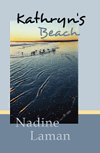 Kathryn's Beach
 High Tide
 Storm Surge

